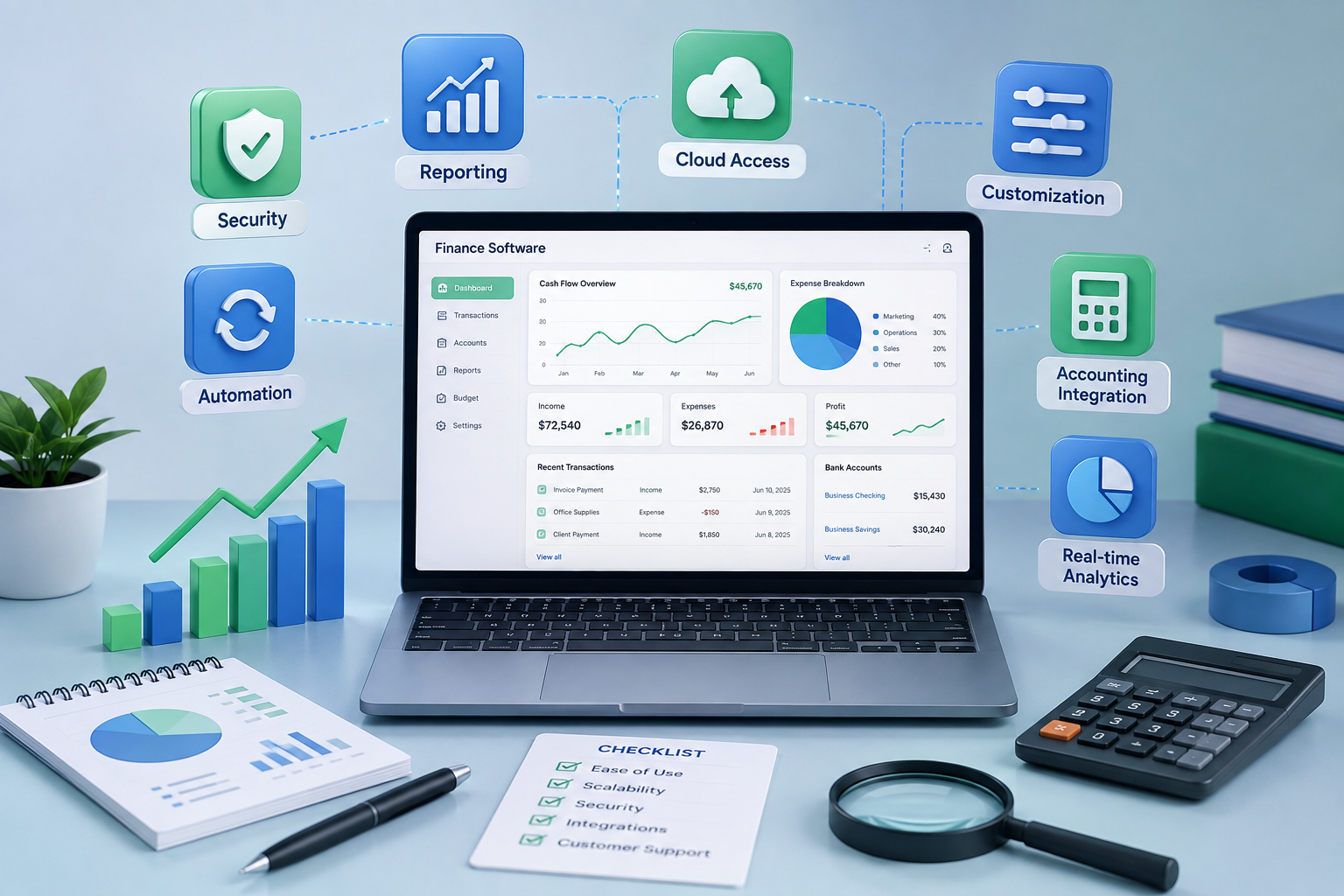
Selecting the right finance software is one of the most impactful decisions you can make for your personal wealth or business operations.
With hundreds of financial apps and enterprise platforms available on the market, finding software that fits your specific workflow can feel overwhelming. Many individuals and business owners make the mistake of choosing software based purely on brand popularity, only to realize later that it lacks critical integration features, charges hidden fees, or offers poor security. To ensure you make a smart investment that simplifies your money management for years to come, here are the most important features to look for when choosing finance software.
1. Seamless Bank Syncing and Integration
The core foundation of modern finance software is automation. If a platform requires you to manually log every single purchase or upload CSV spreadsheets every week, it defeats the main purpose of using software.
Look for tools that offer direct, secure bank feeds. The software should connect seamlessly with your checking accounts, savings deposits, credit cards, investment portfolios, and digital payment gateways. Real-time transaction syncing ensures your dashboard remains accurate without requiring daily manual record-keeping.
Multi-Bank Support
Ensure the platform integrates smoothly with all major financial institutions, credit unions, and global payment processors.
Auto-Categorization
Smart transaction engines should automatically categorize imported expenses into clear spending buckets like groceries, rent, or utilities.
2. Bank-Grade Security and Privacy Protections
Because finance software interacts directly with sensitive account credentials and financial records, uncompromised security is non-negotiable.
- End-to-End Encryption: Choose software that uses 256-bit SSL/TLS encryption to protect your data both in transit and at rest.
- Multi-Factor Authentication (MFA): Ensure the app mandates secondary hardware verification or authenticator app codes during logins.
- Strict Data Privacy Policies: Verify that the vendor guarantees in writing that they will never sell your personal financial data or transaction history to third-party advertisers.
3. Intuitive Reporting and Visual Analytics
Data is useless if it is difficult to read. Powerful finance software should translate complex cash flows into clear, interactive visual reports.
Cash Flow Statements
Easily view income versus expenses across custom timeframes to identify spending trends instantly.
Net Worth Tracking
Monitor long-term wealth growth by balancing active liquid assets against loans, mortgages, and liabilities.
Buying Strategy: Always take advantage of free trials or sandbox demo accounts before committing to annual software subscriptions. Test whether the interface feels intuitive to your daily routine.
4. Tax Preparation and Invoicing Features
Tax season is notoriously stressful, but the right software transforms tax filing into a simple, one-click export process.
- Digital Receipt Capture: Choose tools with built-in mobile scanning features that allow you to snap photos of paper receipts and attach them directly to matching transactions.
- Tax Deduction Tagging: Easily flag tax-deductible expenses throughout the year to maximize your tax return or business write-offs.
- Custom Invoicing (For Businesses): If you run a business or freelance service, look for built-in invoice creation, automated payment reminders, and client tracking features.
5. Cross-Platform Accessibility and Mobile Support
Financial decisions happen everywhere—not just when you are sitting at a desktop computer. Having a fully functional mobile app ensures you can check balances, log receipts, or approve payments on the go.
- Cloud Syncing: Your financial data should sync instantly across desktop web browsers, smartphones, and tablet apps.
- Offline Mode Capabilities: Look for mobile apps that allow you to record cash transactions even when offline, syncing data automatically once reconnected.
- Role-Based User Access: For businesses or multi-user households, ensure you can grant limited access permissions to partners, employees, or accountants without sharing master passwords.
6. Scalability, Transparent Pricing, and Support
Your financial needs will grow over time. Software that works well for a college student may not suit a growing family or expanding business. Choose software that can scale alongside your financial journey.
Pay close attention to pricing structures. Avoid platforms with hidden transaction fees, tier limits on connected accounts, or aggressive add-on costs. Additionally, prioritize platforms with responsive customer support and active user community forums to resolve technical issues quickly.
Conclusion: Investing in the Right Financial Tool
Choosing the right finance software is an investment in your peace of mind and long-term financial security.
By prioritizing seamless bank syncing, bank-level security, clear visual reporting, mobile access, and tax management features, you select a tool that removes financial friction and saves valuable time. Evaluate your core financial needs today, test a few top-rated options, and pick the software that empowers you to take full control of your money.