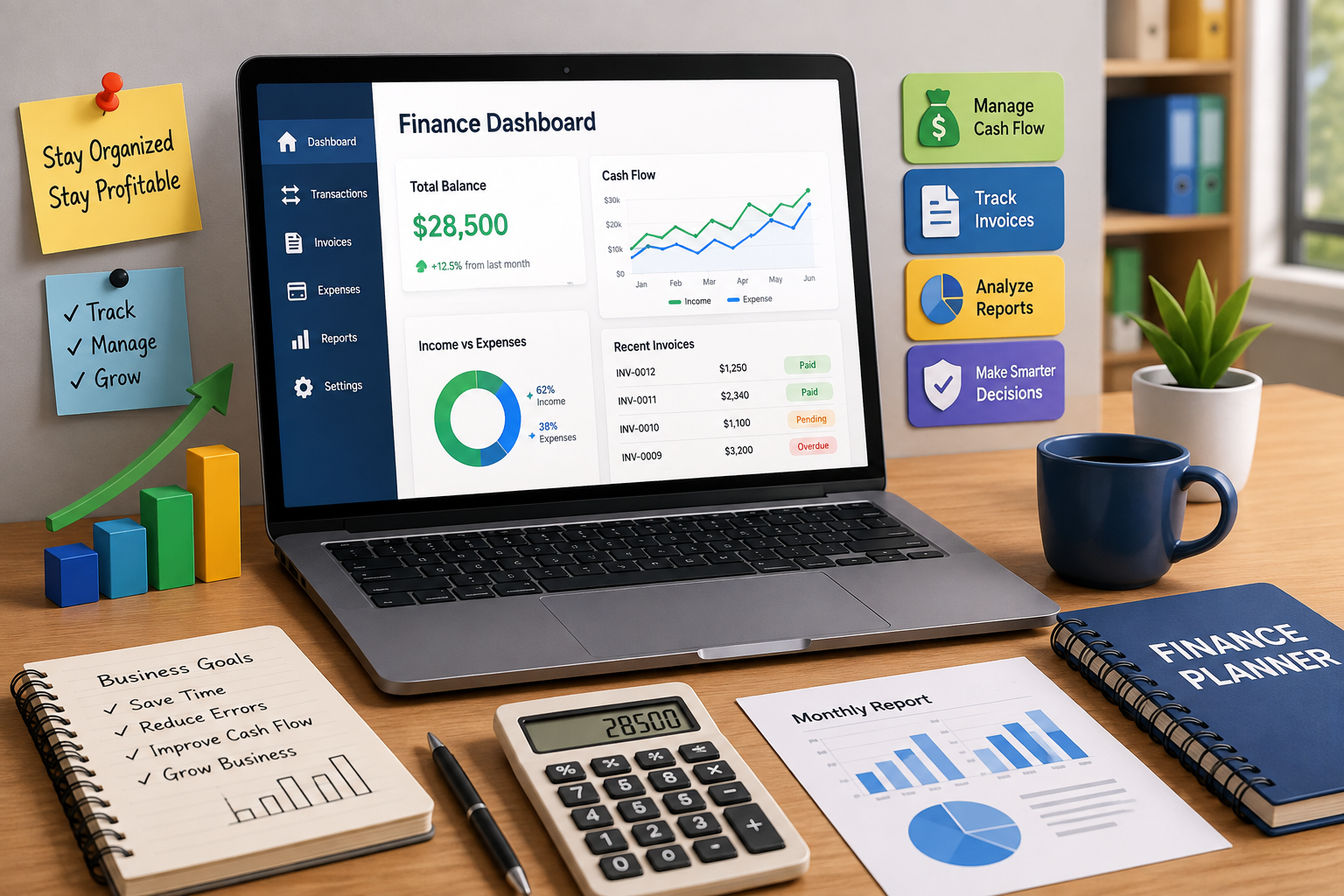
For small business owners, running a successful company requires juggling dozens of operational responsibilities simultaneously. However, poor financial organization remains one of the primary reasons small businesses struggle to scale.
In the early stages, many entrepreneurs manage business expenses using paper receipts, personal bank accounts, and static spreadsheets. While this manual approach might work for a few months, it quickly becomes chaotic as client numbers, vendor invoices, and employee expenses grow. Misplaced receipts, forgotten tax deductions, and delayed client payments create constant stress and cloud your true financial health. Deploying modern finance software solves these challenges by turning unorganized paper trails into an automated, crystal-clear financial system. Here is an in-depth breakdown of how small businesses can leverage finance software to stay organized, compliant, and profitable.
1. Centralizing All Financial Records in One Place
Financial disorganization usually happens when data is scattered across multiple bank accounts, merchant portals, paper folders, and spreadsheet tabs. Searching for a single vendor receipt from six months ago can waste hours of valuable time.
Finance software acts as a single source of truth for your business. By securely linking your business checking accounts, credit cards, payment gateways (like Stripe or PayPal), and payroll systems, the software aggregates every incoming dollar and outgoing expense into a unified dashboard automatically.
Real-Time Bank Feeds
Transactions import continuously, providing an up-to-second view of your liquid cash without manual logging.
Cloud Document Storage
Store digital invoices, tax filings, and receipt images directly alongside matching bank records permanently.
2. Streamlining Invoicing and Accelerating Cash Flow
Cash flow is the lifeblood of any small business. Delayed client payments or forgotten invoices create severe cash bottlenecks that prevent you from paying suppliers or meeting payroll obligations on time.
- Automated Invoice Generation: Create professional, branded invoices with itemized services, tax calculations, and payment links in seconds.
- Automated Payment Reminders: Configure the software to send polite, automated email reminders to clients before and after invoice due dates, reducing overdue payments without awkward manual follow-ups.
- Integrated Online Payments: Allow clients to pay instantly via credit card, ACH transfer, or digital wallets directly from the electronic invoice.
3. Automated Expense Tracking and Digital Receipt Management
Shoeboxes stuffed with faded paper receipts are a nightmare for business owners and accountants alike. Losing track of legitimate business purchases means missing out on valuable tax write-offs.
Mobile Receipt Capture
Snap a photo of physical receipts using your phone; optical character recognition (OCR) extracts dates, amounts, and vendor names automatically.
Tax Deduction Categories
Automatically categorize spending into tax-deductible buckets like office supplies, travel, meals, or marketing.
Efficiency Insight: Staying organized with finance software throughout the year turns stressful, multi-week tax preparation into a simple, 10-minute file export for your accountant.
4. Simplifying Bank Reconciliation and Audit Readiness
Reconciling bank statements involves matching your internal accounting entries against official bank records to catch errors, missing entries, or bank fees. Doing this manually for hundreds of transactions is painstaking work.
Finance software streamlines reconciliation through smart matching algorithms. The system compares your logged invoices and receipts against imported bank statements, highlighting matching transactions automatically. Unmatched items stand out immediately, helping you spot duplicate charges, bank errors, or fraudulent card activity before they cause financial damage.
5. Generating Real-Time Financial Reports and Analytics
To make smart growth decisions—such as hiring new staff, expanding inventory, or investing in advertising—you need a clear understanding of your business’s true profitability.
- Profit & Loss (P&L) Statements: Generate instant P&L reports with one click to see exact revenue, cost of goods sold, and net operating income across any timeframe.
- Balance Sheets: Monitor active assets, physical equipment valuation, inventory costs, and outstanding business loans clearly.
- Cash Flow Forecasting: Predict future cash reserves based on upcoming recurring bills and pending invoice payments to avoid unexpected shortfalls.
6. Seamless Collaboration with Accountants and Team Members
Sharing financial updates with business partners, bookkeepers, or CPAs via email spreadsheets introduces version confusion and security risks.
Cloud-based finance software provides role-based user access permissions. You can grant your external accountant direct advisor access to review your books, prepare tax returns, or run audits without giving them access to move funds or view sensitive payroll details.
Conclusion: Transform Financial Chaos into Strategic Clarity
Financial organization is not just about keeping neat records for tax season; it is about building a scalable foundation for long-term business growth.
By centralizing accounts, automating invoices, tracking expenses via mobile scanning, and generating real-time P&L reports, finance software eliminates administrative stress. Small business owners can stop drowning in paperwork and focus their time and energy on what matters most: serving customers, innovating products, and growing their business.