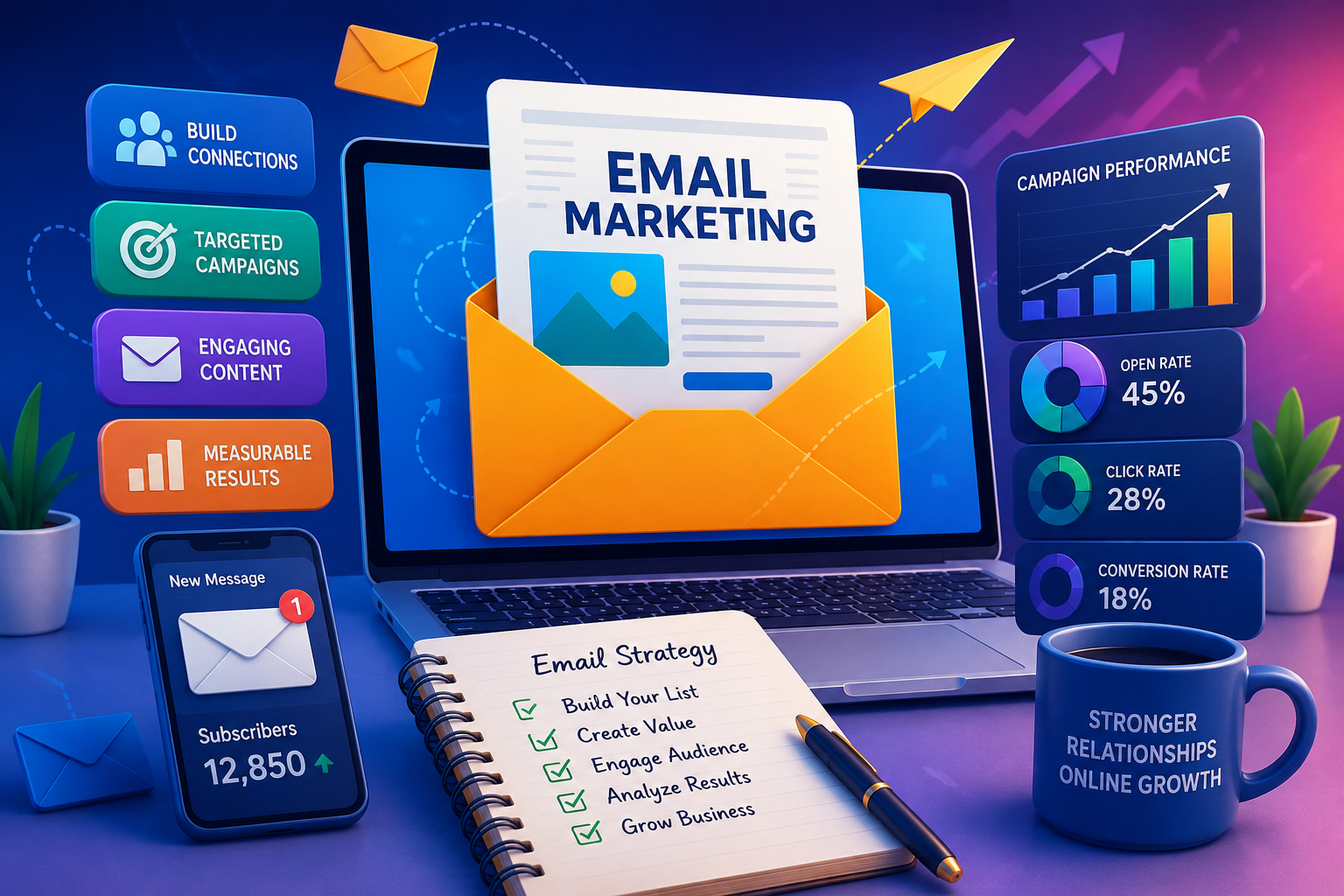
Email marketing remains a practical way for businesses to communicate directly with customers, share useful information, introduce products, and encourage repeat engagement. Unlike many public digital channels, email gives a business an opportunity to build an ongoing communication channel with people who have chosen to hear from it.
However, effective email marketing is about much more than sending a large number of messages. Sustainable results usually come from understanding the audience, delivering useful content, maintaining permission-based lists, writing clear messages, and consistently measuring what works.
Begin With a Specific Marketing Objective
Before creating an email campaign, businesses should decide what they are trying to accomplish. A campaign might be designed to introduce a new product, bring existing customers back, share educational information, generate website visits, announce an event, or support a seasonal promotion.
A clear objective helps determine what information should be included and what action readers should be encouraged to take. Without a defined goal, an email can easily become a collection of unrelated messages that does not provide a clear reason for the recipient to respond.
Build an Audience Through Permission
A healthy email list should be based on genuine permission. Businesses can invite visitors, customers, subscribers, or members to sign up through appropriate forms on their websites and other legitimate channels.
Purchasing random email lists may create poor engagement and can introduce privacy, compliance, and reputation concerns. People who did not expect to receive messages from a business are also less likely to become valuable long-term subscribers.
Make the Signup Experience Simple
If subscribing requires too many steps, potential customers may abandon the process. A straightforward signup form should request only information that is genuinely useful for the intended communication.
Depending on the business, a signup form may ask for an email address and optionally a first name or a preference that helps personalize future communication.
Businesses should also make the purpose of the subscription clear. Transparency at the beginning can help establish trust before the first email is ever delivered.
Segment Subscribers Instead of Treating Everyone the Same
Not every subscriber has the same interests. A new customer may need introductory information, while a long-term customer may be interested in advanced products or loyalty offers.
Segmentation allows businesses to organize subscribers according to useful characteristics, such as purchase history, interests, location, customer status, or interactions with previous campaigns.
More relevant messages can make email communication feel less generic and may improve engagement compared with sending exactly the same message to every person.
Write Subject Lines That Set the Right Expectation
The subject line is often the first part of an email a recipient sees. It should give readers a useful reason to open the message without making misleading promises.
Short, specific wording is often easier to understand than complicated subject lines filled with unnecessary promotional language. Businesses can test different approaches to discover which styles work best for their particular audience.
- Tell readers what the email is about.
- Avoid exaggerated claims.
- Match the subject line with the actual content.
- Consider how the subject appears on mobile screens.
Provide Something Useful in Every Campaign
Customers are more likely to remain engaged when emails consistently provide value. Value does not always mean a discount or special offer.
Useful information can include practical tips, educational explanations, product guidance, industry updates, helpful resources, announcements, or personalized recommendations.
Promotional messages can still be effective, but an email strategy built entirely around selling may cause subscribers to lose interest.
Keep the Message Easy to Read
Many people read emails on smartphones, so the structure should work well on smaller screens. Large blocks of text can make a message difficult to scan.
Businesses can use short paragraphs, descriptive headings, bullet points, clear spacing, and one primary call to action to improve readability.
Images can support an email, but important information should not depend entirely on images being displayed. Clear text remains essential.
Create Clear Calls to Action
An email should make it obvious what the reader can do next. Depending on the campaign, that action could be reading an article, viewing a product, registering for an event, requesting information, or completing a purchase.
A clear call to action reduces confusion and gives the campaign a measurable objective. If several actions are necessary, businesses should make the most important one visually and verbally clear.
Personalize Where It Actually Helps
Personalization can make communication more relevant when it is based on useful customer information. Using a subscriber’s name is one basic example, but more meaningful personalization can involve interests, previous purchases, or content preferences.
Businesses should avoid adding personal details simply because technology makes it possible. Personalization should improve the customer experience rather than feel intrusive.
Choose a Reasonable Sending Schedule
Sending emails too frequently can frustrate subscribers, while communicating too rarely can cause people to forget why they subscribed.
The ideal schedule varies by industry and audience. A news-focused business may communicate frequently, while a specialized service provider may send fewer but more detailed messages.
Monitoring engagement and unsubscribe patterns can help businesses determine whether their schedule needs adjustment.
Use Automation for Routine Communication
Email automation can reduce repetitive work and help businesses communicate at useful moments. Automated messages may include welcome emails, order updates, educational sequences, reminders, or follow-ups based on customer activity.
Automation should still be reviewed regularly. Outdated offers, broken links, incorrect information, or poorly timed messages can damage the customer experience if nobody checks the workflow.
Test Different Approaches
Email performance can vary considerably between audiences. Instead of assuming that one format will always work, marketers can conduct controlled tests.
Depending on the email platform, businesses may test subject lines, calls to action, layouts, offers, sending times, or different content approaches.
Testing works best when businesses change one meaningful element at a time and compare results using an appropriate measurement.
Watch More Than Open Rates
Email marketing performance should be evaluated using several measurements rather than one number. Open rates can provide useful information, but they do not tell the entire story.
Businesses may also examine clicks, conversions, unsubscribe rates, delivery problems, revenue where relevant, and engagement over time.
The most useful metric depends on the campaign objective. For example, an educational newsletter may prioritize clicks and engagement, while a sales campaign may focus more heavily on completed purchases.
Maintain a Clean Subscriber List
Email lists naturally change over time. Some subscribers may become inactive, change addresses, or stop engaging with messages.
Regularly reviewing list quality can help businesses identify delivery problems and understand whether inactive subscribers should be handled differently according to their email platform’s policies and applicable requirements.
A smaller audience that genuinely wants to receive communication can be more valuable than a much larger list filled with inactive or unengaged contacts.
Make Unsubscribing Straightforward
Giving subscribers a clear way to stop receiving marketing emails is an important part of responsible email communication. Businesses should respect unsubscribe requests and follow applicable email marketing and privacy requirements.
Trying to make unsubscribing difficult can damage trust and may create compliance problems. A transparent approach demonstrates that the business values the subscriber’s choice.
Protect Customer Information
Email marketing involves personal information, so businesses should take reasonable steps to protect subscriber data. Access to customer lists should be limited to authorized personnel, and businesses should use reputable email platforms with appropriate security features.
Organizations operating across different countries should also understand the privacy and marketing requirements that may apply to their audiences. Legal obligations can vary depending on location and circumstances.
Connect Email With the Wider Customer Journey
Email works best when it supports other parts of the customer experience. A subscriber might discover a business through search, visit its website, receive useful emails, make a purchase, and later receive customer education or product updates.
Businesses should aim for consistency across these touchpoints. Information in an email should match the landing page, product details, pricing, and customer-service experience.
Focus on Long-Term Relationships
The strongest email marketing strategies are not built around obtaining one quick sale. They focus on creating a reason for customers to remain connected with the business.
Consistent communication, useful information, honest offers, responsive customer service, and relevant content can gradually strengthen customer relationships.
Over time, this approach can support repeat purchases, referrals, stronger brand familiarity, and greater customer loyalty.
Frequently Asked Questions
There is no universal schedule. The right frequency depends on the audience, industry, content type, and expectations established during signup. Businesses should monitor engagement and unsubscribe patterns when adjusting frequency.
Purchased lists can create poor engagement and may introduce privacy, compliance, and deliverability concerns. Building a permission-based audience is generally a more sustainable approach.
The content should match the campaign objective. It may include useful information, an offer, an announcement, educational content, or another relevant message followed by a clear next step.
Yes. Small businesses can use email to maintain customer relationships, share updates, promote products, educate subscribers, and encourage repeat engagement without requiring an extremely complicated marketing system.
Final Thoughts
Effective email marketing is built on relevance, permission, consistency, and trust. Businesses can create stronger campaigns by understanding their audience, collecting subscribers responsibly, segmenting contacts, writing clear messages, and providing useful information instead of relying exclusively on promotions.
Technology can make the process easier through automation, personalization, analytics, and testing, but these tools work best when they support a well-planned strategy. Businesses should continue reviewing their results and adjusting their approach based on real customer behavior.
Most importantly, email marketing should be treated as a long-term communication channel rather than simply a way to send advertisements. When customers receive relevant messages, understand why they are receiving them, and have control over their subscriptions, businesses have a stronger foundation for building lasting relationships and sustainable online growth.