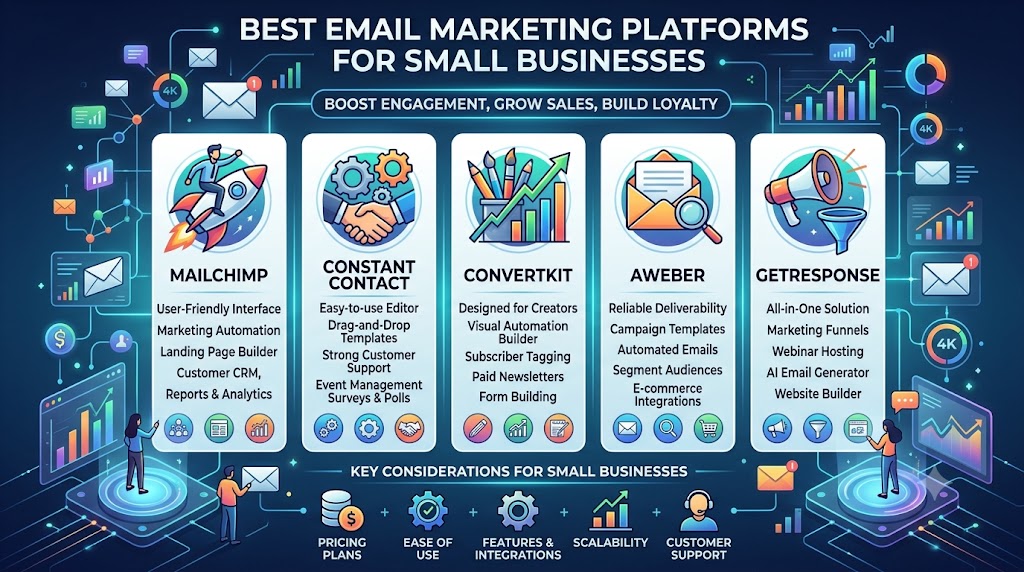
Email marketing is still one of the most reliable ways for small businesses to build customer relationships, promote products, share updates, and increase repeat sales. While social media can change overnight, an email list gives a business direct access to people who already showed interest.
The challenge is choosing the right email marketing platform. A small business does not always need the most expensive tool. It needs software that is easy to use, affordable, professional, and flexible enough to grow with the business.
Why Email Marketing Matters for Small Businesses
Many small businesses focus only on social media, but email marketing gives more control. When someone joins your email list, they are giving permission to hear from your brand. That makes email more personal and often more effective than random online promotion.
A good email platform can help you send newsletters, welcome emails, product offers, appointment reminders, abandoned cart messages, and customer updates. Instead of manually messaging every customer, the software helps automate important communication.
Key Features to Look For
Before choosing any email marketing software, small business owners should look for a few practical features. These features make daily marketing easier and help avoid wasting money on tools that look impressive but are difficult to manage.
- Easy email builder: A drag-and-drop editor helps create professional emails without coding.
- Ready-made templates: Templates save time and keep emails visually clean.
- Automation: Welcome emails, follow-ups, and customer journeys can run automatically.
- List segmentation: You can send different messages to different customer groups.
- Analytics: Open rates, click rates, and campaign reports help improve future emails.
- Integrations: The platform should connect with your website, store, CRM, or booking tools.
Best Email Marketing Platforms for Small Businesses
1. Mailchimp
Mailchimp is one of the most recognized email marketing platforms for small businesses. It is popular because it offers a user-friendly design, email templates, automation options, and tools that support growing brands.
It can be a strong choice for beginners who want a clean dashboard and simple campaign creation. Small businesses can use it for newsletters, product announcements, customer updates, and basic automation.
Best for: Beginners, small online stores, local businesses, and brands that want a well-known all-in-one email tool.
2. Constant Contact
Constant Contact is a solid option for small businesses that want simple campaign creation and reliable marketing tools. It is especially useful for businesses that need email templates, event promotion, customer list management, and easy integrations.
Many local service businesses, nonprofits, consultants, and retail shops prefer tools like Constant Contact because they focus on practical marketing instead of complicated technical settings.
Best for: Local businesses, service providers, nonprofits, event-based businesses, and users who want guided email marketing tools.
3. Brevo
Brevo is a good option for businesses that want email marketing along with other customer communication features. It can support email campaigns, automation, customer management, and in some cases SMS or transactional messaging.
For small businesses that want more than just newsletters, Brevo can be useful because it combines marketing and customer communication in one place.
Best for: Small and growing businesses that want email, automation, CRM-style tools, and multi-channel communication options.
4. MailerLite
MailerLite is known for its clean design and beginner-friendly email tools. It is often a good choice for creators, bloggers, freelancers, coaches, and small business owners who want simple email marketing without a heavy learning curve.
It usually fits businesses that need newsletters, landing pages, signup forms, and basic automation in a simple workspace.
Best for: Bloggers, creators, freelancers, small brands, and businesses that prefer simple design with useful core features.
Comparison Table
| Platform | Best Use | Main Strength |
|---|---|---|
| Mailchimp | Beginner email campaigns | Templates and easy campaign setup |
| Constant Contact | Local and service businesses | Simple marketing tools and integrations |
| Brevo | Growing customer communication | Email, automation, and CRM-style features |
| MailerLite | Creators and simple newsletters | Clean interface and beginner-friendly tools |
How to Choose the Right Platform
Choosing the right email marketing platform depends on your business model. A restaurant may need weekly offers and birthday emails. A consultant may need lead magnets and follow-up sequences. An online store may need abandoned cart emails and product recommendations.
Start by asking what you actually need today. If you only need a monthly newsletter, a simple platform is enough. If you plan to build automated sales funnels, choose a platform with stronger automation. If you sell products online, check whether the tool connects with your ecommerce platform.
Common Mistakes to Avoid
One common mistake is collecting email addresses without a clear purpose. A list is only valuable when you send useful content. Another mistake is sending too many promotional emails and not enough helpful information. Customers stay subscribed when they feel the emails are useful, not just sales-focused.
Small businesses should also avoid buying email lists. This can damage trust, hurt deliverability, and create legal or compliance problems. A smaller list of real interested customers is much better than a large list of people who never asked to hear from you.
Final Thoughts
Email marketing software can make a small business look more professional, stay connected with customers, and increase repeat sales. Platforms like Mailchimp, Constant Contact, Brevo, and MailerLite all offer useful options, but the best choice depends on your goals.
If you are just starting, choose a simple platform with templates, automation, signup forms, and clear reporting. As your business grows, you can move toward more advanced features like customer segmentation, ecommerce automation, and multi-channel campaigns.
The most important thing is consistency. A well-written email sent regularly to interested customers can do more for a small business than complicated marketing tools that are never used properly.