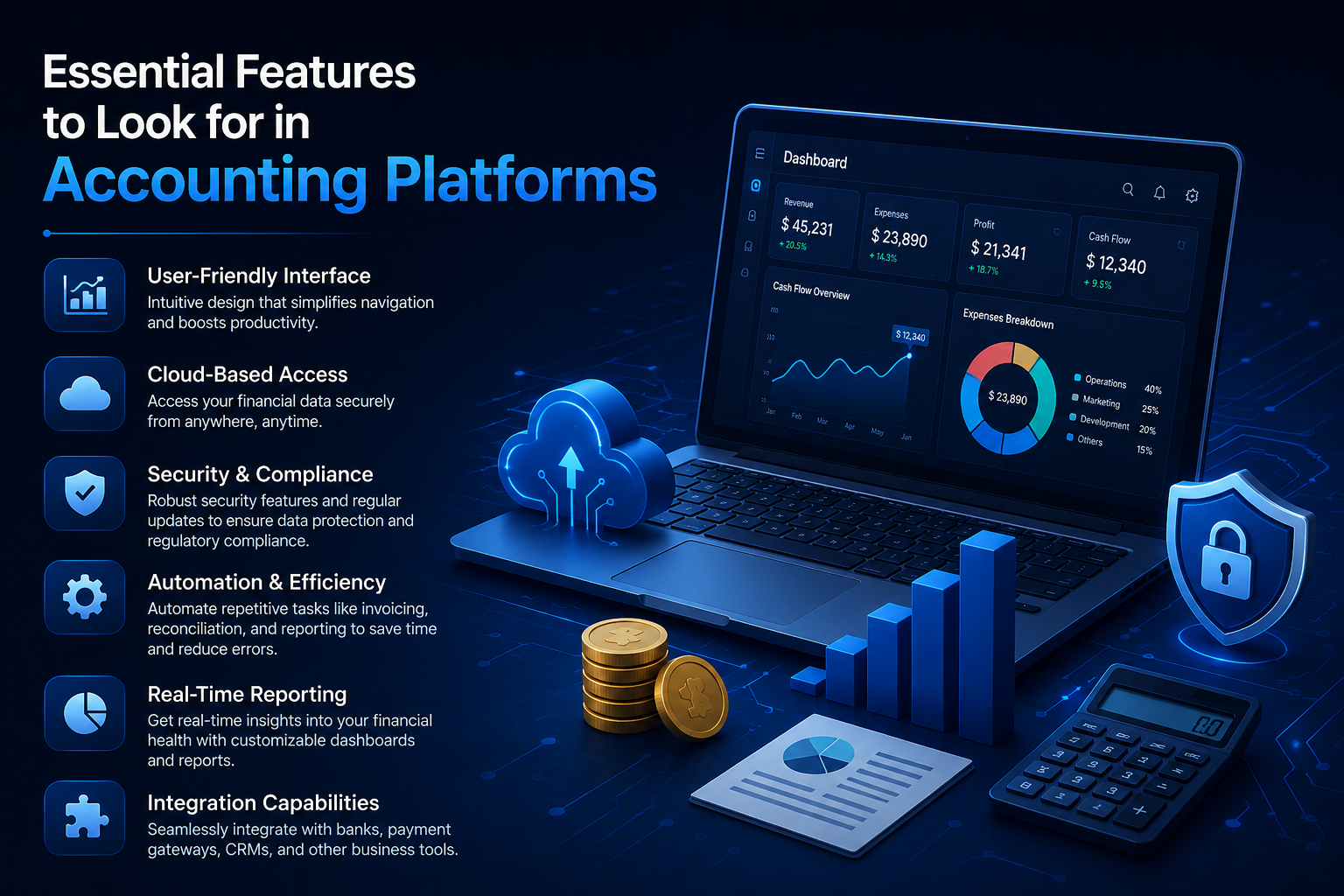
Choosing the right accounting platform is one of the most important financial decisions a business can make. Whether you operate a small startup, an online store, a service-based company, or a growing organization, your accounting software plays a central role in managing financial records, monitoring cash flow, tracking expenses, and supporting business growth. Modern accounting platforms offer far more than basic bookkeeping. They now include automation, reporting, cloud access, integrations, budgeting tools, and advanced financial insights that help businesses operate more efficiently.
With so many accounting solutions available, selecting the right platform can be challenging. Some systems focus on simplicity, while others provide advanced features designed for larger organizations. Understanding which features truly matter helps businesses avoid unnecessary costs and choose software that supports both current needs and future growth.
📊 Why Features Matter
The right features improve efficiency, reduce errors, simplify financial management, and provide better visibility into business performance. Businesses that choose platforms based on practical requirements are more likely to achieve long-term value from their investment.
User-Friendly Interface
One of the first features businesses should evaluate is ease of use. Accounting software should simplify financial management rather than create additional complexity. A clean dashboard, intuitive navigation, and clearly organized tools help users complete tasks efficiently.
Business owners, managers, accountants, and bookkeepers often have different levels of technical experience. Software that is easy to understand can reduce training requirements and improve adoption across the organization.
- Simple navigation menus.
- Customizable dashboards.
- Clear financial summaries.
- Easy report generation.
- Minimal learning curve.
Cloud-Based Accessibility
Cloud accounting has become the standard for many businesses because it allows users to access financial information from virtually anywhere. Whether working from the office, home, or while traveling, cloud-based platforms provide flexibility without sacrificing visibility.
Cloud systems also support collaboration by allowing accountants, financial advisors, and team members to access relevant information securely when needed.
☁️ Cloud Benefits
- Remote access to financial data.
- Automatic software updates.
- Real-time information synchronization.
- Improved collaboration.
- Reduced dependency on local hardware.
Automated Bookkeeping Features
Manual bookkeeping consumes valuable time and increases the risk of errors. Modern accounting platforms automate many repetitive tasks, helping businesses improve efficiency while maintaining more accurate records.
Automation capabilities often include:
- Transaction categorization.
- Recurring invoice creation.
- Expense tracking.
- Payment reminders.
- Bank reconciliation.
- Tax calculations.
Automation reduces administrative workload and allows finance teams to focus on higher-value activities.
Expense Management Tools
Tracking business expenses accurately is essential for budgeting, profitability analysis, and tax preparation. Strong accounting platforms include expense management tools that simplify how businesses monitor and organize spending.
Many solutions allow users to upload receipts digitally, categorize expenses automatically, and generate expense reports with minimal effort.
| Expense Feature | Business Value |
|---|---|
| Receipt Storage | Better recordkeeping |
| Expense Categorization | Improved organization |
| Approval Workflows | Greater control |
| Expense Reports | Financial visibility |
Invoice and Payment Management
Cash flow often depends on how efficiently businesses manage invoices and collect payments. Strong accounting platforms provide tools for creating professional invoices, tracking payment status, and sending automated reminders.
These capabilities help reduce late payments while improving overall financial management.
- Custom invoice templates.
- Automated payment reminders.
- Online payment support.
- Invoice tracking.
- Recurring billing options.
Financial Reporting and Analytics
Accurate financial reporting helps business leaders make informed decisions. The best accounting platforms provide real-time insights into revenue, expenses, profitability, and overall financial performance.
Reporting tools should allow businesses to generate:
- Profit and loss statements.
- Balance sheets.
- Cash flow reports.
- Expense summaries.
- Revenue reports.
- Budget comparisons.
Detailed reporting improves visibility and supports strategic planning.
📈 Better Insights, Better Decisions
Businesses that regularly review financial reports are often better equipped to manage costs, identify opportunities, and respond quickly to changing market conditions.
Bank and Payment Integrations
Manual data entry can create inefficiencies and increase the risk of mistakes. Accounting software that integrates directly with banks, payment processors, and financial institutions simplifies transaction management.
These integrations allow businesses to import transactions automatically, reconcile accounts more efficiently, and maintain more accurate records.
Integration capabilities often improve productivity while reducing bookkeeping workloads.
Scalability for Future Growth
Businesses should consider not only their current requirements but also future needs. A platform that works well today may become restrictive as transaction volumes increase and operations become more complex.
Scalable accounting software can support:
- Additional users.
- More transactions.
- Multiple business locations.
- Expanded reporting needs.
- Additional integrations.
- Advanced financial controls.
Choosing scalable software helps avoid costly migrations later.
Data Security and Access Controls
Financial information represents one of the most sensitive categories of business data. Accounting platforms should include strong security measures to protect against unauthorized access and cyber threats.
Important security features include:
- Multi-factor authentication.
- Role-based access controls.
- Data encryption.
- Activity logging.
- Automatic backups.
- Secure cloud infrastructure.
🔒 Security Is Essential
Financial records contain valuable information that should be protected through multiple layers of security and controlled access permissions.
Tax Management Capabilities
Preparing for tax obligations can be one of the most time-consuming financial tasks for businesses. Accounting software with tax-related features helps simplify preparation by maintaining organized records and generating relevant reports.
Many platforms provide tax summaries, transaction categorization, and reporting tools that reduce administrative burdens during tax season.
Accurate recordkeeping also supports compliance efforts and reduces the likelihood of reporting errors.
📋 Essential Accounting Platform Checklist
- User-friendly interface.
- Cloud-based access.
- Automated bookkeeping.
- Expense management tools.
- Invoice and payment tracking.
- Financial reporting capabilities.
- Bank integrations.
- Scalability for growth.
- Strong security features.
- Tax preparation support.
Final Thoughts
Accounting platforms have evolved into powerful business management tools that provide far more than basic bookkeeping functionality. The right software can improve efficiency, reduce manual workloads, enhance financial visibility, and support better business decisions.
When evaluating accounting solutions, businesses should focus on features that align with operational needs while also supporting future growth. Prioritizing usability, automation, reporting, security, integrations, and scalability helps ensure long-term value from the investment.
Organizations that choose accounting platforms carefully are better positioned to manage finances effectively, maintain accurate records, improve decision-making, and achieve sustainable growth in an increasingly competitive business environment.