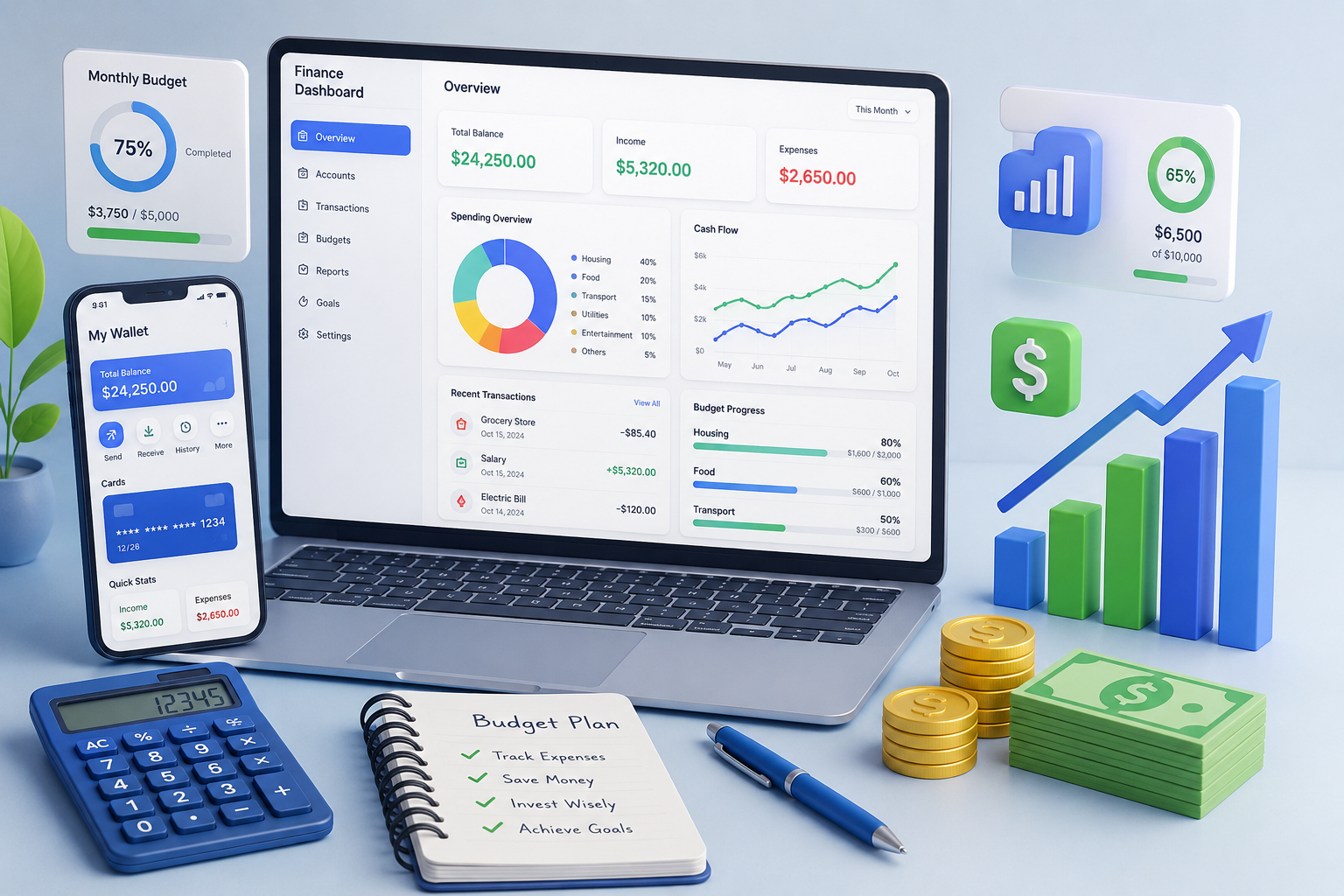
Whether you are managing a household budget, running a growing business, or planning for long-term investments, keeping complete control over your cash flow is critical. Modern financial platforms bring automation, real-time analytics, and intelligent insights to your fingertips. Instead of spending hours trying to balance accounts, financial software turns complex money management into a seamless, automated process. Here is an in-depth look at how financial software simplifies money management for everyone.
1. Real-Time Cash Flow Tracking & Centralization
One of the biggest financial hurdles is having money scattered across multiple bank accounts, credit cards, loans, and investment platforms. Manually logging into dozens of portals to check balances creates confusion and leads to missed details.
Finance software centralizes all your accounts into one unified dashboard. By securely connecting your financial institutions, these tools aggregate your balances and transactions automatically in real time. You get an immediate, crystal-clear snapshot of your overall net worth, current cash reserves, and active liabilities in one place.
Automated Syncing
Transactions from your credit cards and bank accounts are imported continuously, removing the need for manual record-keeping.
Smart Categorization
AI-driven engines automatically group expenses into categories like groceries, utilities, dining, or business supplies.
2. Effortless Budgeting and Expense Control
Traditional budgeting fails because static spreadsheets require constant manual updates that most people abandon after a few weeks. Financial software makes budgeting dynamic and effortless.
- Custom Budget Caps: Set monthly spending limits for specific categories like entertainment, travel, or dining out.
- Proactive Overspending Alerts: Receive instant push notifications or emails when your spending approaches or exceeds your set budget limits before the month ends.
- Visual Analytics: View intuitive pie charts and bar graphs that show you exactly where your money goes, helping you spot unneeded subscriptions and impulse habits instantly.
3. Automated Bill Payments and Recurring Tracking
Late fees, dinged credit scores, and unexpected service cancellations usually happen due to forgotten due dates rather than a lack of funds.
Financial software monitors upcoming recurring bills, subscription renewals, and loan payments automatically. By scheduling auto-payments or setting built-in calendar reminders, you ensure every utility bill, credit card balance, and mortgage payment is settled on time—saving money on penalties while steadily building your credit score.
Financial Wisdom: Financial software does not just tell you where your money went; it gives you the proactive clarity to decide where your money should go next.
4. Goal Setting and Wealth Building Acceleration
Whether saving for a emergency fund, building a home down payment, or investing for retirement, reaching major financial milestones requires consistent progress.
Automated Savings Rules
Set up rules that round up everyday transactions to the nearest dollar and automatically transfer the spare change into high-yield savings accounts.
Portfolio Tracking
Monitor your stocks, mutual funds, crypto assets, and real estate performance in real time to ensure your asset allocation matches your long-term goals.
5. Simplified Tax Preparation and Business Invoicing
Tax season is notoriously stressful for freelancers, small business owners, and individuals alike. Searching through shoe boxes of old paper receipts or endless bank statements at the end of the year leads to missed tax deductions and errors.
- Digital Receipt Scanning: Snap photos of physical receipts with your phone camera; the software extracts the text, attaches it to the matching transaction, and archives it safely.
- Tax Deduction Tagging: Separate business expenses from personal spending automatically to claim every tax deduction you are entitled to.
- One-Click Tax Exporting: Export organized financial reports (Profit & Loss, Expense Ledgers) straight to your accountant or tax software with a single click.
6. Enhanced Security and Fraud Detection
Modern finance software uses bank-grade security protocols, including 256-bit SSL encryption, multi-factor authentication, and biometric logins to safeguard your financial data.
Furthermore, because these systems analyze your transaction history continuously, they can flag unusual spending patterns, double-charges, or fraudulent transactions instantly—allowing you to freeze compromised cards before major financial damage occurs.
Conclusion: Take Control of Your Financial Future
Financial software is more than just a digital ledger—it is a powerful personal assistant that removes stress, saves valuable time, and provides clear financial direction.
By automating record-keeping, tracking spending habits, preventing late fees, and simplifying tax prep, finance software empowers you to make smarter, confident decisions with your money. Start by connecting your primary accounts to a trusted finance tool today, and take the first step toward effortless money management.