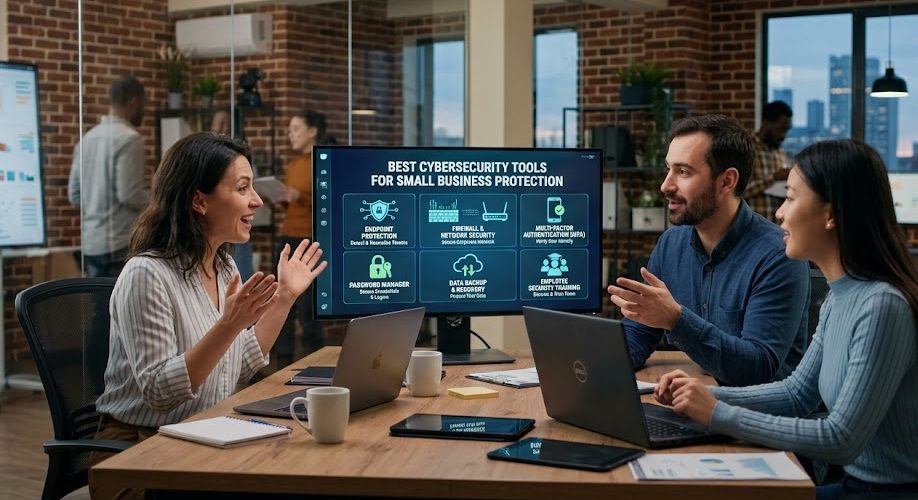
Cybersecurity is no longer a concern only for large corporations. Small businesses have become one of the most common targets for cybercriminals because they often have valuable customer data but fewer security resources. From ransomware attacks and phishing scams to data breaches and malware infections, cyber threats can cause serious financial and reputational damage. The good news is that modern cybersecurity software provides affordable and effective protection that helps small businesses defend their systems, employees, and sensitive information.
As technology continues to play a larger role in daily business operations, protecting digital assets has become a necessity rather than an option. Small businesses rely on computers, cloud platforms, email systems, online payments, and customer databases. Every connected device represents a potential entry point for cyber threats. Choosing the right cybersecurity tools can significantly reduce risks while providing peace of mind.
🔒 Why Small Businesses Need Cybersecurity Software
Many small business owners mistakenly believe cybercriminals only target large enterprises. In reality, smaller organizations are often viewed as easier targets because they may lack dedicated security teams and advanced protection systems. A single security incident can result in lost revenue, downtime, legal complications, and damaged customer trust.
Common Cyber Threats Facing Small Businesses
Understanding common threats helps businesses choose software that provides the most relevant protection. Cybercriminals continuously develop new attack methods, but several threats remain particularly common among small organizations.
- Phishing Attacks: Fraudulent emails designed to steal credentials and sensitive information.
- Ransomware: Malicious software that encrypts files and demands payment.
- Malware: Harmful programs that damage systems or steal information.
- Password Attacks: Attempts to gain access through weak or stolen passwords.
- Data Breaches: Unauthorized access to confidential business information.
- Network Intrusions: Attempts to access company networks and connected devices.
Essential Features to Look For
Before selecting cybersecurity software, businesses should understand which features provide the strongest protection. The best solutions combine multiple security layers rather than focusing on a single threat type.
| Feature | Purpose |
|---|---|
| Real-Time Protection | Detects threats instantly |
| Firewall Security | Blocks unauthorized access |
| Anti-Malware | Prevents malicious software infections |
| Email Security | Protects against phishing attacks |
| Data Protection | Secures sensitive information |
| Cloud Security | Protects cloud-based systems |
Top Cybersecurity Tools for Small Business Protection
1. Bitdefender Business Security
Bitdefender is widely recognized for providing strong malware protection, ransomware defense, and advanced threat detection. It offers centralized management features that make security easier to monitor across multiple devices.
Its lightweight design helps maintain system performance while providing comprehensive protection against evolving threats.
Best For: Small businesses seeking comprehensive endpoint protection.
2. Norton Small Business
Norton provides multi-device security designed specifically for smaller organizations. It includes malware protection, identity security features, cloud backup capabilities, and web protection tools.
Its user-friendly approach makes it attractive for businesses without dedicated IT staff.
Best For: Businesses looking for simple deployment and management.
3. Malwarebytes for Business
Malwarebytes focuses heavily on malware prevention and threat removal. It helps identify suspicious behavior, detect ransomware activity, and prevent harmful applications from compromising business systems.
Its straightforward interface allows businesses to maintain protection without extensive technical knowledge.
Best For: Organizations prioritizing malware defense.
4. Avast Business Security
Avast offers endpoint protection, network security, antivirus capabilities, and management tools designed for growing businesses. Its cloud-based administration features help monitor devices from a central location.
Businesses can manage security policies while maintaining visibility across connected systems.
Best For: Small teams managing multiple devices.
5. Microsoft Defender for Business
Organizations already using Microsoft services often find Defender for Business appealing because it integrates naturally with existing Microsoft environments. It provides endpoint security, threat detection, vulnerability management, and centralized security controls.
The platform is particularly useful for businesses operating within Microsoft ecosystems.
Best For: Microsoft-focused organizations.
Additional Security Practices Every Business Should Follow
Cybersecurity software is only one part of a complete security strategy. Businesses should also implement strong security habits and employee awareness programs.
- Use strong and unique passwords.
- Enable multi-factor authentication.
- Keep software updated.
- Train employees to recognize phishing attempts.
- Regularly back up important data.
- Limit access to sensitive information.
- Monitor network activity.
- Review security policies regularly.
💡 Small Business Security Checklist
- Install reliable cybersecurity software.
- Enable automatic updates.
- Use secure password management practices.
- Protect email accounts from phishing threats.
- Back up critical business data regularly.
- Educate employees about cyber risks.
- Secure cloud applications and storage.
- Monitor systems for unusual activity.
How to Choose the Right Solution
The best cybersecurity software depends on business size, budget, technology environment, and security requirements. Businesses should evaluate ease of use, management capabilities, scalability, customer support, and compatibility with existing systems.
Solutions that combine antivirus protection, ransomware defense, email security, and centralized management often provide the strongest value for small businesses.
It is also important to consider future growth. As organizations expand, security requirements become more complex. Choosing scalable software helps avoid costly migrations later.
Final Thoughts
Cybersecurity has become a critical business requirement rather than a technical afterthought. Small businesses face increasing risks from phishing attacks, ransomware, malware, and data breaches. Investing in reliable cybersecurity software helps reduce these risks while protecting customers, employees, and business operations.
Tools such as Bitdefender, Norton, Malwarebytes, Avast, and Microsoft Defender provide strong security capabilities designed to meet the needs of smaller organizations. Combined with employee training, strong passwords, multi-factor authentication, and regular updates, these solutions create a solid defense against modern cyber threats.
Businesses that prioritize cybersecurity today are better positioned to maintain customer trust, protect sensitive information, and support sustainable growth in an increasingly digital world.