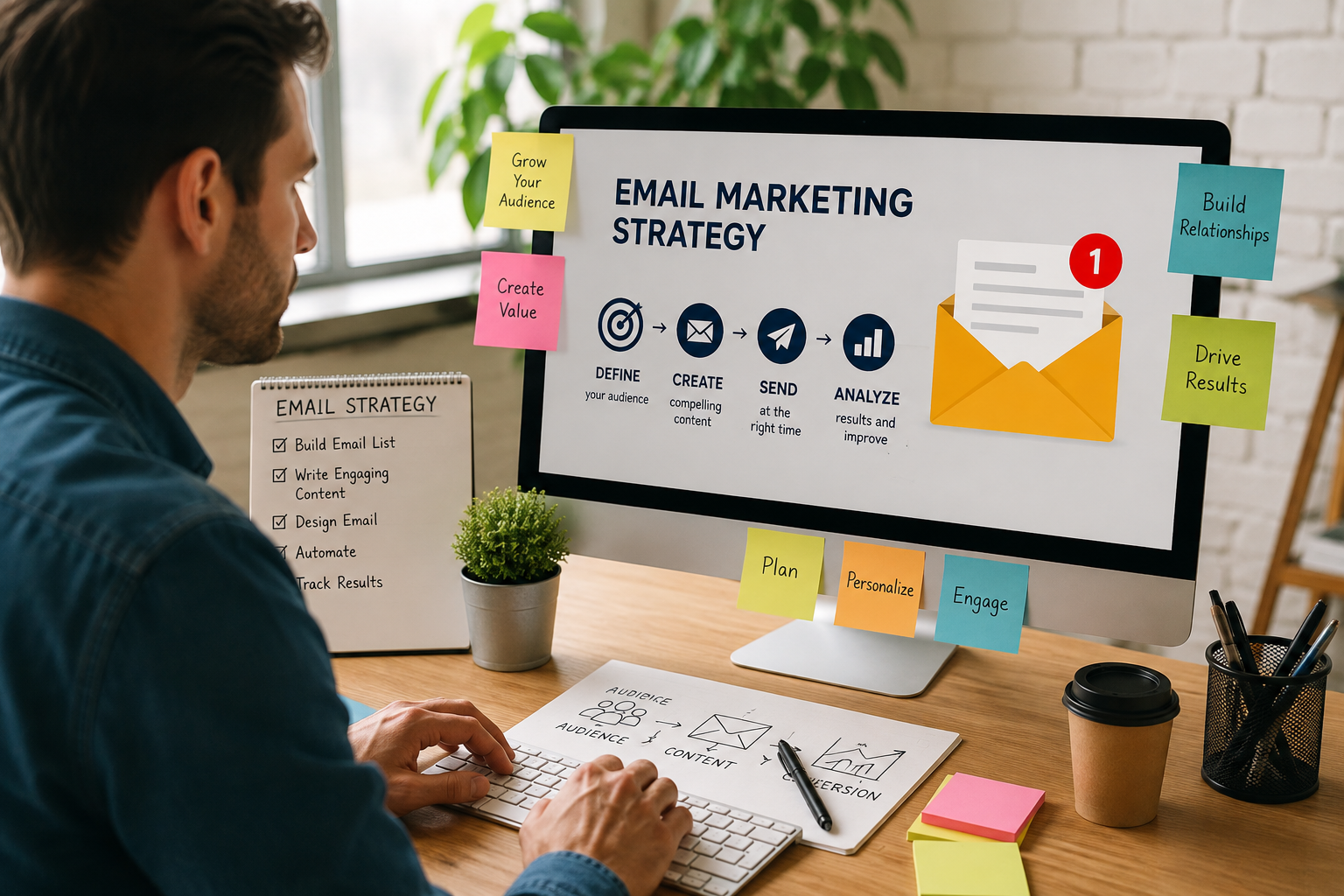
In an era dominated by ever-changing social media algorithms and rising ad costs, email marketing remains the most reliable, cost-effective, and direct channel to connect with your audience.
Unlike social channels where platform updates can instantly shrink your organic reach, your email list is a digital asset that you own entirely. Whether you are launching an e-commerce store, building a freelance business, or growing a personal blog, developing a structured email marketing campaign allows you to nurture trust and turn casual readers into loyal buyers. Here is a practical, step-by-step roadmap to building an effective email marketing strategy from scratch.
Phase 01 Define Clear Campaign Goals Before Sending
Sending sporadic messages without a clear target often results in low open rates and subscriber unsubscribes. Before choosing templates or crafting subject lines, determine exactly what success looks like for your email strategy.
Nurturing Leads: Share helpful guides, industry insights, and educational stories to build trust before making sales offers.
Driving Conversions: Announce new product releases, promote seasonal discounts, or share case studies to encourage purchases.
Improving Retention: Onboard new clients, collect customer feedback, and send personalized recommendations to keep buyers coming back.
Phase 02 Choose the Right Email Marketing Platform
Sending bulk marketing campaigns from a personal Gmail or Outlook account damages your sender domain reputation and triggers spam filters. Specialized Email Service Providers (ESPs) handle technical compliance, deliverability, and automation.
As a beginner, select a user-friendly platform that offers drag-and-drop template builders, basic audience segmentation, and automated workflow triggers. Reliable beginner-friendly tools include Mailchimp, ConvertKit (Seated), Brevo, or MailerLite. Look for software that provides scalable pricing so your subscription grows alongside your subscriber list.
Phase 03 Build a High-Converting Lead Magnet
People guard their email inboxes carefully. Placing a generic “Subscribe to My Newsletter” box on your site rarely drives signups. You need to offer a valuable incentive in exchange for their email address—commonly known as a Lead Magnet.
Actionable Resources: Free downloadable PDFs, printable checklists, or mini e-books that solve a specific problem instantly.
Exclusive Savings: First-purchase discount codes, free shipping coupons, or early access to sales events for online shoppers.
Educational Content: Free 5-day email courses, template libraries, or exclusive video walkthroughs.
Phase 04 Craft an Automated Welcome Email Series
The moment someone subscribes to your list is when their interest in your brand is highest. Automated welcome sequences receive significantly higher open and click-through rates than standard broadcast newsletters.
Email 1 (Instant): Deliver the promised lead magnet immediately, thank them for joining, and set clear expectations regarding content frequency.
Email 2 (Day 2): Share your brand story, core mission, or top-performing blog posts to build an authentic connection.
Email 3 (Day 4): Address common customer challenges, share social proof or user reviews, and introduce your primary product or service gently.
Phase 05 Master Content Formatting & Copywriting
Most people scan emails quickly rather than reading every word. To hold subscriber attention and drive clicks, keep your email layouts clean, scannable, and mobile-responsive.
- Catchy Subject Lines: Keep subject lines under 50 characters so they read clearly on mobile devices. Use curiosity, clarity, or benefit-driven language.
- Scannable Formatting: Break up long paragraphs into short 2-3 sentence blocks. Use bold headers, bullet points, and high-contrast call-to-action (CTA) buttons.
- Single Primary CTA: Focus every email on one primary action—whether that is reading a blog post, watching a video, or buying a product. Multiple competing links confuse readers.
Phase 06 Track Core Metrics and Optimize Performance
Building an effective email list requires continuous testing and refinement based on real audience interaction data.
Open Rate (OR): Measures how enticing your subject lines and sender name are to your audience.
Click-Through Rate (CTR): Evaluates how compelling your body copy, layout, and call-to-action buttons are.
Unsubscribe Rate: Helps you judge whether your content frequency and message relevance match subscriber expectations.
Summary Final Thoughts for Sustainable Growth
Succeeding at email marketing does not happen overnight. Focus on consistently delivering genuine value to your subscribers’ inboxes rather than blasting frequent sales pitches.
Start by building a simple opt-in form, crafting a high-value lead magnet, and setting up a basic 3-part welcome sequence. As your subscriber list expands, start segmenting your audience based on their preferences to send increasingly personalized, highly relevant campaigns that turn casual readers into loyal brand advocates.