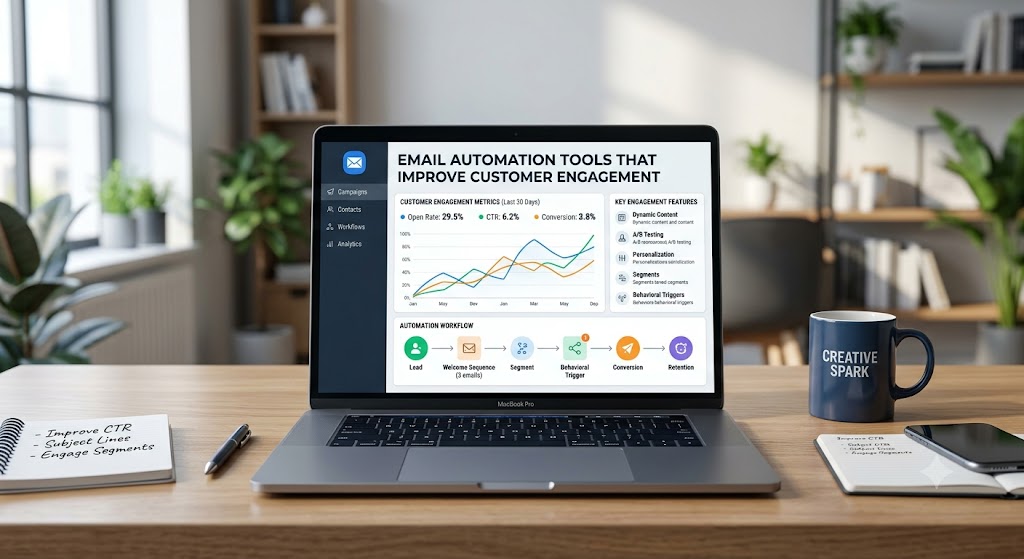
Email marketing continues to be one of the most powerful digital marketing strategies available to businesses of all sizes. Unlike social media platforms where algorithms control visibility, email provides direct access to customers and prospects. However, manually sending emails to hundreds or thousands of subscribers is not practical. This is why email automation tools have become essential for modern businesses looking to improve customer engagement and build long-term relationships.
Email automation allows businesses to automatically send personalized messages based on customer behavior, preferences, and interactions. Instead of creating every email manually, businesses can build automated workflows that operate continuously in the background. This approach not only saves time but also ensures customers receive relevant information when they are most likely to engage.
📧 Why Email Automation Matters
Customers expect timely and personalized communication. Automated emails help businesses stay connected with their audience without requiring constant manual effort. When used correctly, automation improves customer satisfaction, increases engagement, and strengthens brand loyalty.
Understanding Email Automation
Email automation refers to the process of sending emails automatically when specific actions or conditions are met. These actions are known as triggers. For example, when someone subscribes to a newsletter, makes a purchase, downloads a guide, or abandons a shopping cart, the system can automatically send relevant emails.
Rather than sending generic messages to everyone, automation allows businesses to deliver personalized experiences. Subscribers receive content that matches their interests and actions, making communication more meaningful and effective.
🚀 Benefits of Email Automation
- Improves customer engagement.
- Saves valuable time and resources.
- Creates personalized customer experiences.
- Strengthens customer relationships.
- Increases customer retention.
- Supports business growth through scalable communication.
- Delivers consistent messaging across customer journeys.
Popular Email Automation Platforms
1. Mailchimp
Mailchimp remains one of the most widely used email marketing platforms for small businesses. It offers automation workflows, audience segmentation, email templates, and reporting tools. Businesses can easily create welcome sequences, customer follow-ups, and promotional campaigns without technical expertise.
Its user-friendly interface makes it a practical choice for businesses that are new to email marketing automation.
2. ActiveCampaign
ActiveCampaign is known for advanced automation features and powerful personalization capabilities. Businesses can create highly targeted customer journeys based on browsing behavior, purchases, engagement levels, and customer preferences.
The platform combines automation, customer relationship management, and marketing tools into one comprehensive solution.
3. Brevo
Brevo provides businesses with automation tools designed to improve communication across multiple customer touchpoints. It supports automated workflows, customer segmentation, and personalized messaging that helps maintain consistent engagement.
Its flexibility makes it suitable for both growing businesses and established organizations.
4. MailerLite
MailerLite focuses on simplicity while still providing powerful automation features. Businesses can create email sequences, automated newsletters, landing pages, and subscriber management workflows without unnecessary complexity.
This makes it particularly attractive for creators, bloggers, freelancers, and small businesses.
Automation Workflows That Boost Engagement
Not all automated emails deliver the same results. Some workflows consistently perform better because they address customer needs at critical moments during the customer journey.
Welcome Email Series
A welcome sequence is often the first interaction a subscriber has with a business after joining an email list. This series introduces the brand, explains what subscribers can expect, and encourages further engagement.
Because subscribers are most interested immediately after signing up, welcome emails typically achieve higher open and click rates than regular campaigns.
Abandoned Cart Recovery
Online shoppers frequently add products to their cart without completing a purchase. Automated cart recovery emails remind customers about their unfinished purchase and encourage them to return.
These emails help recover potentially lost sales while maintaining customer engagement.
Post-Purchase Follow-Up
Customer engagement should continue after a purchase. Automated follow-up emails can provide product guidance, request feedback, recommend related products, or encourage future interactions.
This strategy strengthens relationships and improves customer satisfaction over time.
Re-Engagement Campaigns
Inactive subscribers are common in every email list. Re-engagement campaigns help reconnect with these users by delivering useful content, updates, or special offers designed to renew interest.
💡 Personalization Improves Results
Customers respond better when emails feel relevant. Personalization can include names, product recommendations, location-based content, purchase history, or behavior-based messaging. Even small personalization efforts can significantly improve engagement rates.
Best Practices for Successful Email Automation
- Create clear customer journeys before building automation workflows.
- Segment subscribers based on interests and behavior.
- Focus on providing value rather than constant promotions.
- Regularly review automation performance metrics.
- Test subject lines and email content for better results.
- Maintain a consistent sending schedule.
- Update workflows as customer needs evolve.
Businesses should remember that automation exists to improve customer experiences, not overwhelm subscribers. Sending too many emails can reduce engagement and increase unsubscribe rates.
Common Mistakes to Avoid
One common mistake is treating all subscribers the same. Customers have different interests, behaviors, and goals. Sending identical emails to everyone often reduces effectiveness.
Another mistake is focusing exclusively on sales messages. While promotional emails are important, subscribers also appreciate educational content, helpful tips, industry insights, and useful resources.
Businesses should also avoid creating overly complicated automation systems. Simple, focused workflows are often more effective and easier to manage than highly complex sequences.
Final Thoughts
Email automation tools have transformed how businesses communicate with customers. By delivering timely, personalized, and relevant messages, automation helps improve engagement while reducing manual workload.
Whether using Mailchimp, ActiveCampaign, Brevo, MailerLite, or another platform, businesses can build stronger customer relationships through strategic automation. The key is creating valuable experiences that keep subscribers interested and engaged over time.
As customer expectations continue to rise, businesses that invest in effective email automation strategies will be better positioned to maintain customer loyalty, improve communication, and support long-term growth.