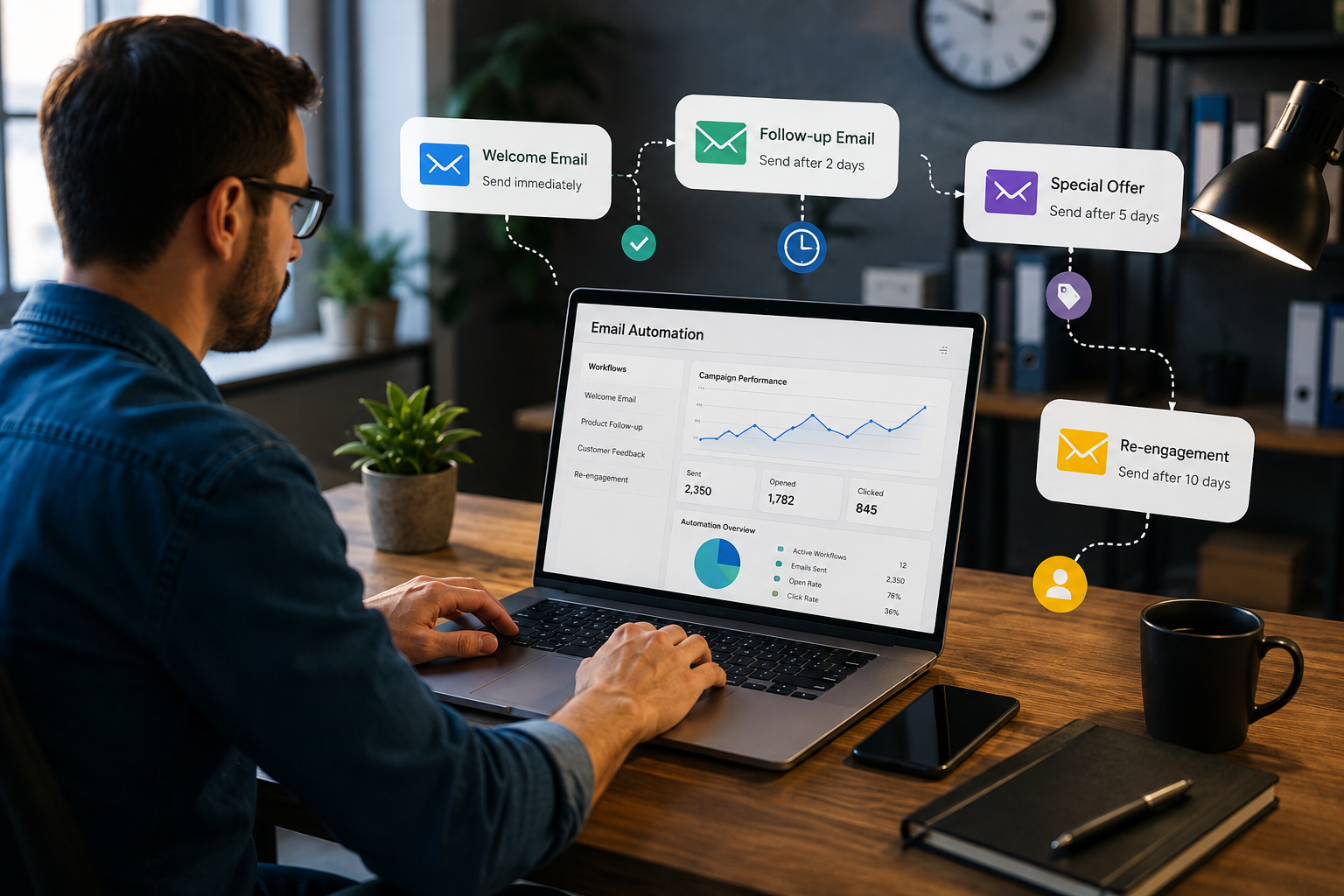
For small business owners, time is the single most valuable asset. Between managing daily operations, addressing customer support inquiries, tracking finances, and marketing products, entrepreneurs often find themselves stretched thin.
Marketing is essential for growth, yet manually drafting and sending emails to every single customer or prospect consumes hours of precious time every week. This is where Email Automation steps in as a game-changer. By setting up automated workflows that trigger based on customer actions, small businesses can deliver timely, personalized communications on autopilot—saving dozens of work hours while accelerating sales growth.
1. Eliminating Manual Administrative Tasks
Without automation, communicating with customers requires manual data entry, constant inbox monitoring, and sending repetitive messages one by one. Email automation replaces these tedious tasks with set-and-forget workflows:
- Instant Welcome Sequences: Send immediate confirmation and welcome messages to new subscribers or buyers the moment they sign up, without lifting a finger.
- Automated Invoicing & Receipts: Generate and deliver purchase confirmations, digital downloads, and transaction receipts automatically upon checkout.
- Appointment & Event Reminders: Reduce costly no-shows by automatically scheduling pre-appointment SMS or email reminders to clients ahead of time.
2. Recovering Abandoned Carts Automatically
In e-commerce, over 65% of online shopping carts are abandoned before checkout completion. Manually following up with every hesitant shopper is virtually impossible for small teams.
Automated abandoned cart series detect when a customer leaves items behind and trigger a sequence of friendly reminder emails over 24 to 48 hours. These automated messages can offer assistance, highlight product reviews, or provide limited-time discount codes—reclaiming lost sales round the clock without any manual intervention.
3. Nurturing Leads 24/7 Without Staff Intervention
Not every website visitor is ready to make an immediate purchase. Prospective clients usually require trust-building and education before committing financially.
Automated Drip Campaigns
Schedule a series of helpful, educational emails that deliver valuable tips and case studies to new leads over several weeks automatically.
Lead Scoring Triggers
Automatically track subscriber clicks and trigger high-priority sales alerts to your team when a lead demonstrates strong buying intent.
Automation Insight: Email automation is not about sounding robotic. It allows you to deliver highly relevant, timely, and personalized messages precisely when your audience is most engaged, making your small business feel larger and more responsive.
4. Improving Customer Retention and Re-engagement
Acquiring new customers costs up to five times more than retaining existing ones. Automated campaigns make customer retention effortless by keeping your brand top-of-mind.
- Post-Purchase Onboarding: Send automated product usage guides, FAQs, and tips to ensure buyers get maximum value from their purchase.
- VIP Birthday & Anniversary Rewards: Surprise loyal customers with special birthday discounts or membership anniversary rewards automatically.
- Win-Back Campaigns: Automatically reach out to inactive subscribers who haven’t made a purchase in 90 days with exclusive “We Miss You” incentive offers.
5. Scaling Personalization Effortlessly
Personalization boosts email open rates and conversions significantly, but manually customizing emails for hundreds of contacts is unsustainable. Modern automation platforms connect with your CRM to dynamically insert customer names, past purchase details, and recommended products into messages automatically.
This level of tailored communication ensures every customer feels uniquely valued, boosting satisfaction while requiring zero ongoing time investment from your staff.
Conclusion: Focus on What Truly Matters
Implementing email automation transforms your email marketing from a time-consuming chore into an active, revenue-generating engine that runs continuously in the background.
By automating routine administration, lead nurturing, abandoned cart recovery, and customer retention, small business owners reclaim dozens of hours each month. This saved time can be reinvested into strategic growth, product development, and building meaningful, face-to-face client relationships.